
Principles
of Training
The physiology, science, and comparative analysis that proves why AURUM is the gold standard.
M04 / 4 Lessons / Quiz
Muscle: The Body's Most Valuable Organ
Muscle as Metabolic Engine
- Skeletal muscle is the primary site of glucose disposal — 70–80% of insulin-stimulated uptake
- More muscle = more GLUT4 transporters = better glucose disposal = lower T2D risk
- Muscle at rest burns 3× more calories per kg than fat tissue (resting metabolic rate)
- Every kg of muscle added raises daily calorie burn by ~50–100 kcal
- Muscle produces myokines (IL-6, irisin) — anti-inflammatory hormones with systemic health effects
- Grip strength correlates with all-cause mortality — muscle is a longevity biomarker
The Cardio Myth — Hadza Study (Pontzer et al. 2012)
- Hadza hunter-gatherers walk 12–15km/day, yet burn the SAME total calories as sedentary Westerners
- Mechanism: metabolic compensation — body reduces NEAT to maintain energy balance
- Implication: you cannot out-walk or out-run a poor metabolic foundation
- Chronic steady-state cardio elevates cortisol → breaks down muscle → worsens metabolism
- Resistance training builds the metabolic engine — more muscle = permanently higher resting burn
- EPOC: 24–48h of elevated metabolism after AURUM session adds meaningful calorie burn
The Six Principles of Training
Overload
Training must exceed current capacity to create adaptation. Progressive overload is non-negotiable — the body only adapts to demands that exceed what it can already handle.
Specificity (SAID)
Specific Adaptation to Imposed Demands. The body adapts precisely to the type, speed, and pattern of training. Isokinetic training produces isokinetic strength — specificity matters.
Individuality
Genetic factors explain up to 50% of variance in training response. Some clients gain rapidly; others more slowly. Data tracks the individual curve, not a population average.
Diminishing Returns
Early gains are rapid (mostly neural). Returns slow over time as capacity increases. Advanced clients need more specific stimulus variation to continue progressing.
Reversibility
Detraining begins within 2 weeks of cessation. Neural adaptations are lost fastest; structural hypertrophy is lost more slowly. Consistency always beats intensity peaks.
Periodisation
Planned variation in load, volume, and intensity over time. Prevents accommodation. AURUM data makes periodisation measurable — not guesswork.
Priming, Tempo, and the Eccentric Advantage
- Priming (warm-up): dynamic movement that activates the CNS without pre-fatiguing target muscles — the correct pre-session routine
- Static stretching before training reduces force output by up to 8% (acute effect) — avoid static holds before AURUM sessions
- Correct pre-session: light movement, breathing, mental focus — prepare the nervous system, not just the muscles
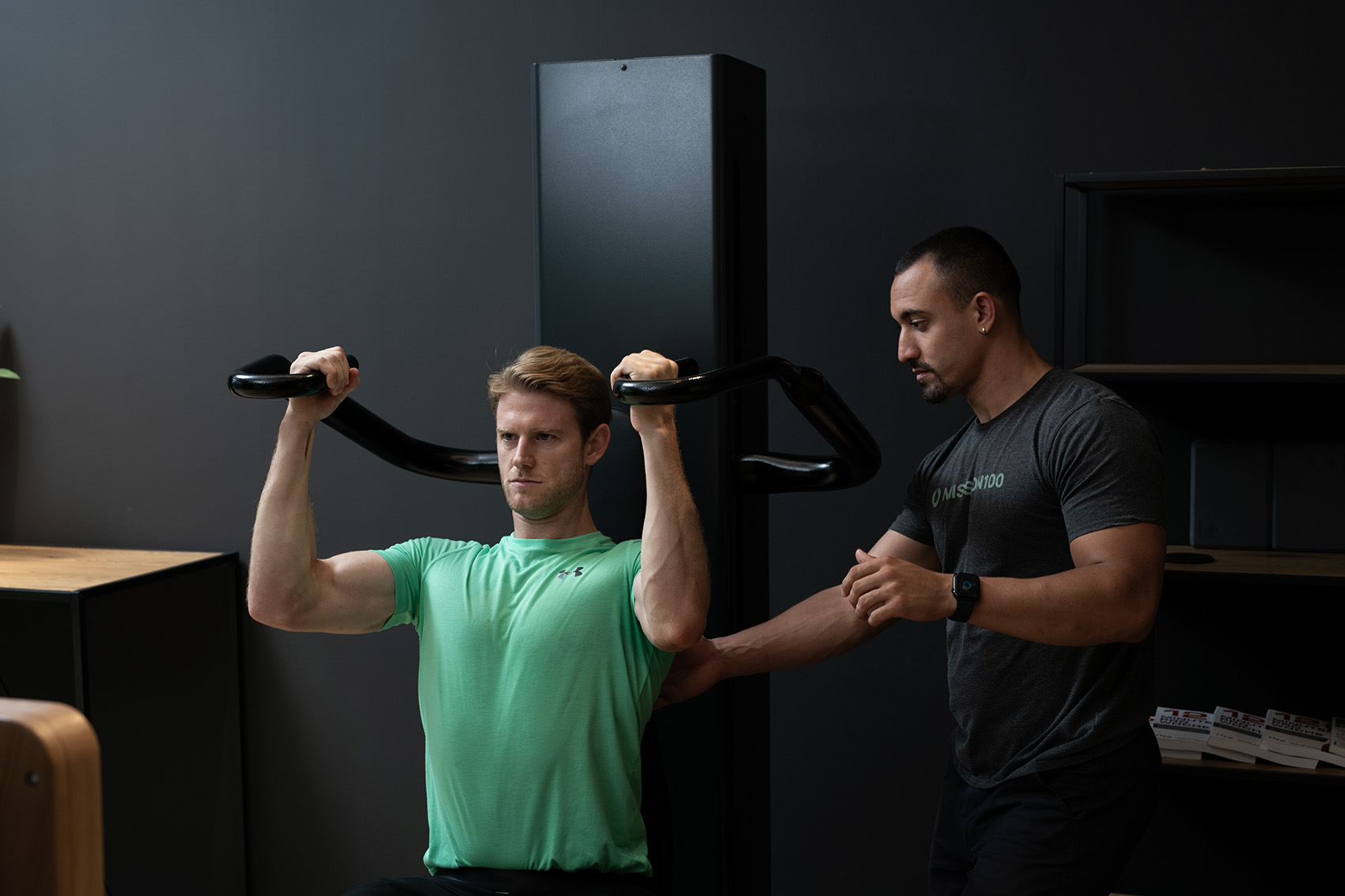
- Tempo in AURUM: 4s concentric / 8s eccentric — calibrated to isokinetic measurement and maximum eccentric loading
- Why 8s eccentric: muscle generates 20–40% more force eccentrically — the most productive phase of the rep
- Roig et al. 2009 (BJSM): eccentric-only training produces 25% more hypertrophy than concentric-only
- The eccentric is where the training signal is strongest — AURUM enforces it on every rep, every session
- Discipline in tempo = the primary difference between an effective AURUM session and a wasted one
AURUM vs Conventional Training — The Full Comparison
Conventional Gym Training
- Ballistic force peaks: joint injury risk, especially at full load initiation
- Multiple sets required: 3–4 sets per exercise = 60–90 minute sessions
- High frequency (3–5×/week) = accumulated recovery debt for most people
- Progress tracking: subjective, manual, inconsistent
- Spotter required for true muscular failure at high loads
- High dropout: complexity, time, injury, plateau frustration
- Cardio separately required for "heart health" — separate time investment
AURUM Isokinetic Training
- No ballistic peaks: isokinetic speed control = smooth force profile throughout
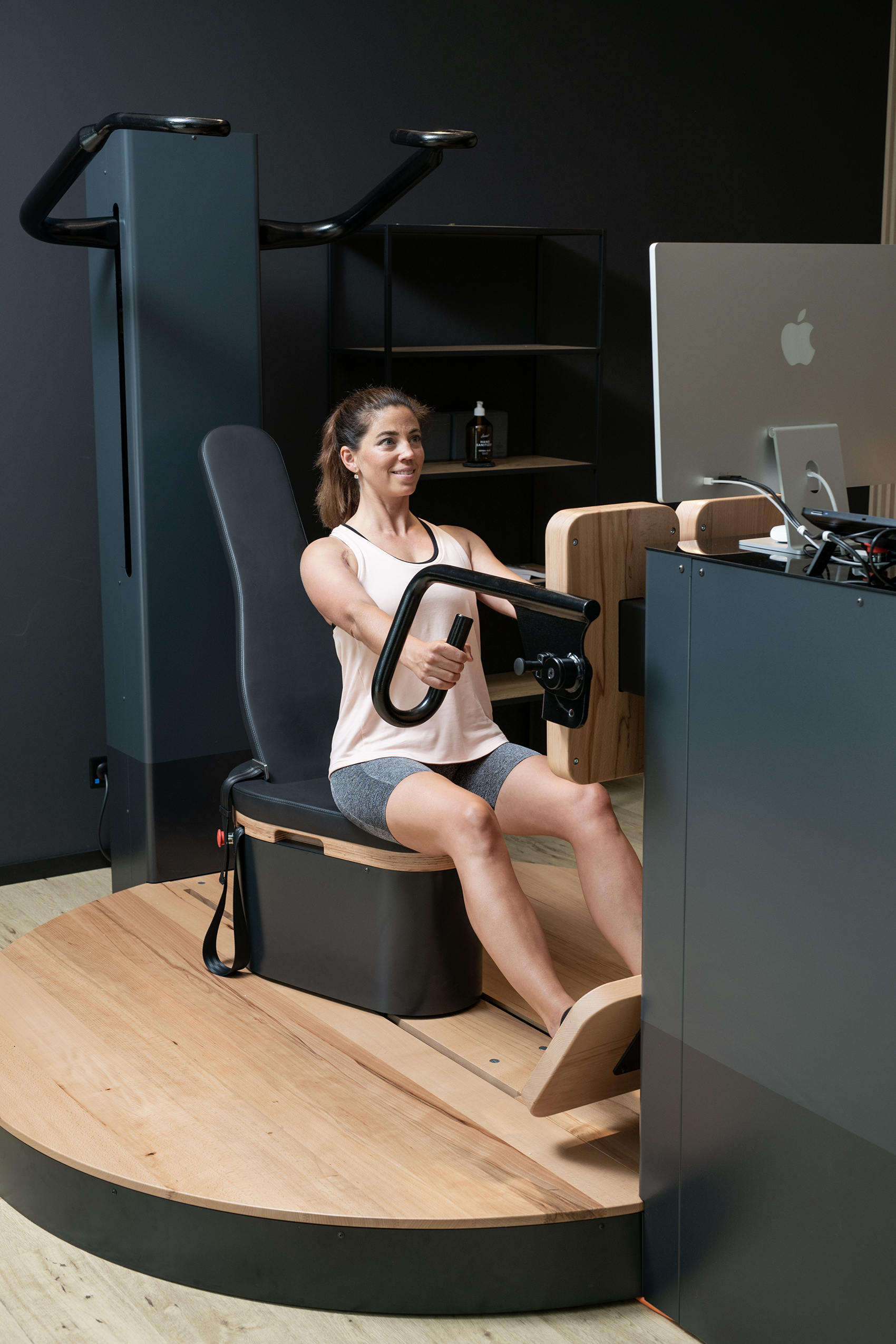
- One set per exercise to failure: 6 minutes total, equivalent adaptive stimulus
- Once or twice weekly: aligned with 5–7 day supercompensation window
- Objective session data: force, symmetry, volume — every rep documented
- No spotter needed: resistance stops at failure, not continues
- High retention: simple, fast, measurably effective — barriers eliminated
- HIT RT produces cardiovascular adaptations comparable to steady-state aerobic training
McGuff's Health / Fitness / Training Framework
Health
The base: absence of disease, functional capacity for daily life, metabolic homeostasis. This is the minimum. AURUM delivers this in 6 minutes once weekly.
Fitness
Measurable physical capacity above baseline: strength, power, VO2max, body composition. Requires structured progressive stimulus. AURUM tracks this objectively.
Training
Goal-specific periodised programming toward a performance target. Appropriate for athletes and advanced clients. Requires data to manage intelligently.
The AURUM Position
Most clients need Health → Fitness. AURUM delivers both simultaneously, efficiently. Very few need true Training-level complexity — and the app enables it when they do.
Matching Protocol to Client
Senior seeking independence needs Health. Optimiser seeking peak performance needs Fitness/Training. The same machine and protocol serves both — differentiated by coaching.
Train Smart.
Recover Fully.
Adapt Consistently.
You now understand the metabolic case for muscle, the science behind isokinetic training, and the six principles that govern all effective training. The comparison is conclusive. The framework is clear. Apply it every session.
Next: Module 5 — Human Physiology → Anatomy Applied to Coaching