Human
Physiology
The anatomy, muscular physiology, and exercise science that every AURUM coach needs to coach with confidence.
M05 / 4 Lessons / Advanced
Coach Smarter.
Explain More. Retain Better.
Clients who understand why their body responds to training stay longer. Coaches who can explain the physiology of what they are witnessing — a pump, a power curve shape, a plateau — build authority and trust that goes far beyond technique cues.
- Explain adaptation in plain language — 'Your nervous system is becoming more efficient at recruiting muscle fibres'
- Understand why a power curve looks a certain way based on muscle physiology
- Anticipate training responses based on a client's anatomy, age, and history
- Communicate credibly with physiotherapists, doctors, and health professionals
- Answer difficult client questions: 'Why am I not sore anymore?' 'Why did my progress slow?'
.jpg)
Bones, Joints, Muscles: The Active and Passive System
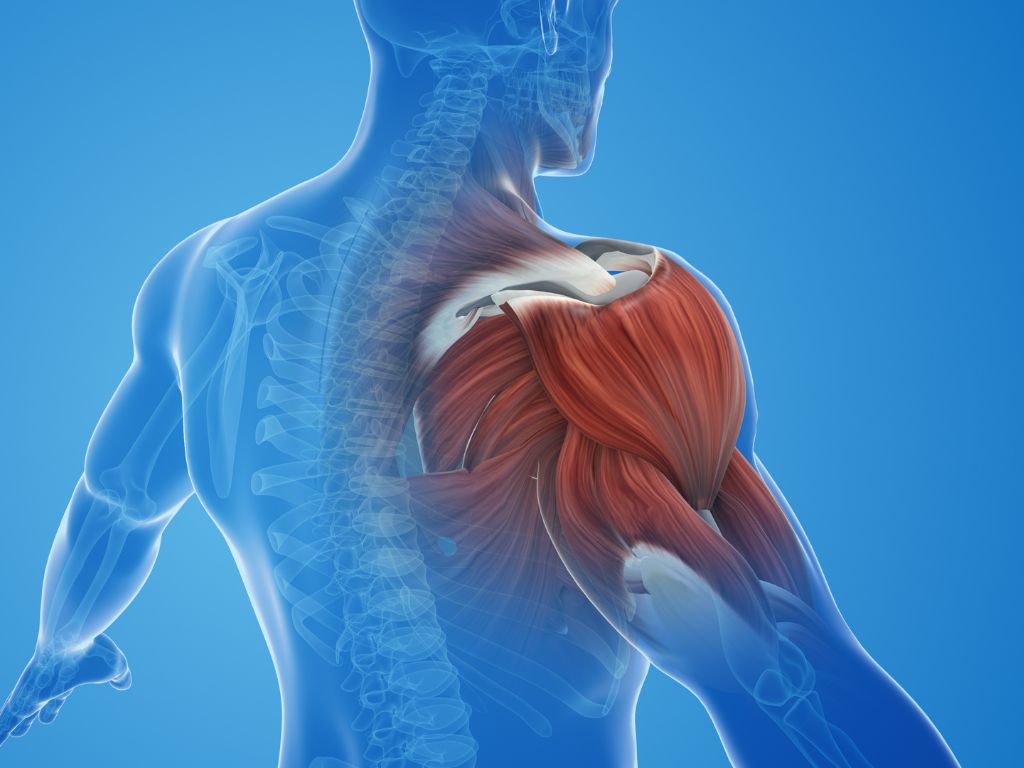
The human body's movement apparatus is divided into two systems — passive (the structure) and active (the movers).
Bones, Joints & Ligaments
The skeleton provides structural support, protects organs, stores minerals (calcium, phosphorus), and produces blood cells. Strength training increases bone mineral density — critical for preventing osteoporosis.
Joint types: Ball-and-socket (shoulder, hip), Hinge (elbow, knee), Gliding (vertebral facets)
Ligaments: Connect bone to bone — passive stabilisers. Cannot be trained directly — strengthened by surrounding musculature.
Muscles, Tendons & Motor Units
Muscles generate force by contracting. Tendons transmit that force to bones. Motor units — a motor neurone plus the muscle fibres it controls — are the functional unit of muscular contraction.
Type I fibres: Slow-twitch, fatigue-resistant, aerobic.
Type II fibres: Fast-twitch, high force, fatigues quickly. AURUM targets predominantly Type II at maximum intensity.
Three Types of Contraction. AURUM Uses All Three.
Concentric (Shortening)
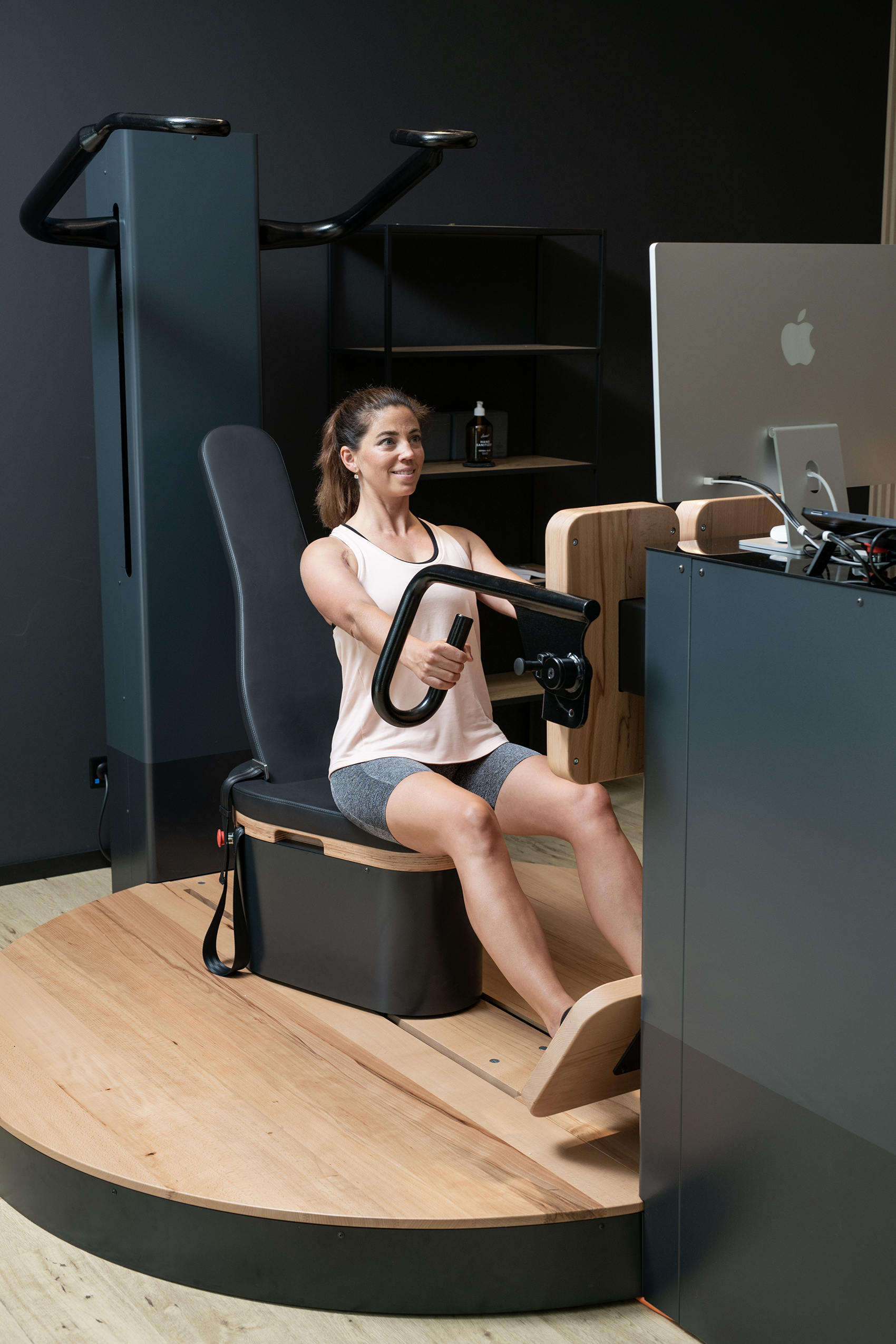
Muscle shortens while producing force. Example: The push phase of the Chest Press. In AURUM: 4 seconds. The conventional 'lifting' phase.
Eccentric (Lengthening)
Muscle lengthens while resisting force. Example: The return phase of the Chest Press. In AURUM: 8 seconds. Research shows eccentric loading produces 20–40% greater mechanical tension — the primary driver of strength and hypertrophy.
Isometric (Static)
Muscle maintains constant length under load. Example: Holding the midpoint of any AURUM exercise. AURUM doesn't use static holds deliberately — but transition points between concentric and eccentric involve brief isometric moments.
The science is clear: eccentric loading is the most potent stimulus for muscle adaptation. AURUM's 8-second eccentric phase is not incidental — it is the core mechanism of the training effect.
How the Heart and Brain Respond to Training
Strength training is not just a muscular event — it produces profound adaptations in the cardiovascular and nervous systems. Understanding these adaptations helps coaches explain long-term progress to clients.
The Heart Gets Stronger Too
Cardiac hypertrophy: heart muscle strengthens with training
Stroke volume increases: more blood pumped per beat → lower resting heart rate
Capillarisation: new capillaries grow in trained muscle → better oxygen delivery
VO2max: improves with consistent training — correlates strongly with longevity
Blood pressure: regular RT reduces resting systolic BP by 4–8 mmHg (meta-analysis evidence)
Neural Efficiency: The First Gains
Intra-muscular coordination: faster, more synchronised motor unit recruitment
Inter-muscular coordination: agonist/antagonist timing improves — movement becomes more efficient
Beginners' gains in first 4–8 weeks are primarily neural — not hypertrophy
Rate coding: the CNS learns to fire motor units faster for greater force production
Stretch reflex optimisation: the neuromuscular system becomes more sensitive to load changes
The Functional Circle Concept
AURUM's 6-exercise protocol maps directly onto the four Functional Circles (Funktionskreise) — a systematic anatomical framework used in German-speaking sports science to organise movement assessment and training.
FK I — Head & Neck
Cervical spine musculature, neck alignment, head posture. Relevant for all AURUM exercises — neutral head position is critical for safe force production.
FK II — Trunk
Thoracic and lumbar spine, thorax, pelvis, deep abdominals, erector spinae. Directly trained by Torso Extension. Core stability enables all other exercises.
FK III — Lower Extremities
Hip, knee, and ankle joints; quadriceps, hamstrings, gluteals, calves. Primarily trained by Leg Press. The largest muscle mass — biggest metabolic impact.
FK IV — Upper Extremities
Shoulder girdle, elbow, wrist; deltoids, pectorals, lats, arms. Targeted by Row, Chest Press, Lat Pulldown, and Overhead Press.
The Big Six covers FK II, III, and IV in every session — a complete functional training stimulus.
Five Fundamental Movements. One Protocol.
All human movement can be categorised into five fundamental patterns. AURUM's Big Six trains four of them in every session — more complete than most 90-minute conventional gym programmes.
Push
Horizontal and vertical pushing. Trained by: Chest Press (horizontal), Overhead Press (vertical). Critical for everyday tasks: pushing open doors, lifting overhead.
Pull
Horizontal and vertical pulling. Trained by: Row (horizontal), Lat Pulldown (vertical). Often undertrained in sedentary populations — leads to postural imbalance.
Squat/Press (Lower Body)
Hip and knee dominant movements. Trained by: Leg Press. The largest compound movement — highest hormonal and metabolic response.
Extension (Spinal)
Posterior chain activation. Trained by: Torso Extension. Critical for back pain prevention and everyday functional strength.
Rotate / Stabilise
Not directly trained by AURUM's Big Six — but the core stability required throughout all 6 exercises develops rotational stabilisers implicitly.
Most sedentary clients are deficient in pulling and spinal extension strength. AURUM addresses both in the first session.
Which System Powers
the 6-Minute Workout?
Each AURUM exercise is 60 seconds of maximum-intensity effort. This places the primary metabolic demand squarely on the glycolytic (anaerobic lactic) system — with ATP-CP powering the initial seconds of each set.
0–5 seconds (ATP-CP)
Maximum power output. Creatine phosphate provides immediate ATP. This phase is critical — coach clients to start at full intensity immediately.
5–40 seconds (Glycolytic)
Glycogen breaks down to sustain intensity. Lactate accumulates — clients feel the burn. This is where the training signal is strongest.
40–60 seconds (Mixed)
Aerobic contribution increases but intensity should remain high. The final reps are the most valuable — coach clients not to ease off.
Between exercises (Recovery)
60–90 second recovery. ATP-CP replenishes (~80% in 60s). The aerobic system facilitates lactate clearance — one reason aerobic base matters.
Anatomy in
the Service of
Better Coaching.
Physiology knowledge transforms how you coach. You see a power curve differently. You explain a plateau more credibly. You adapt a session for a post-rehab client with more confidence. This module is the science that elevates your coaching from instruction to expertise.
Next: Module 6 — Nutrition & Diet → Fuelling the AURUM Result