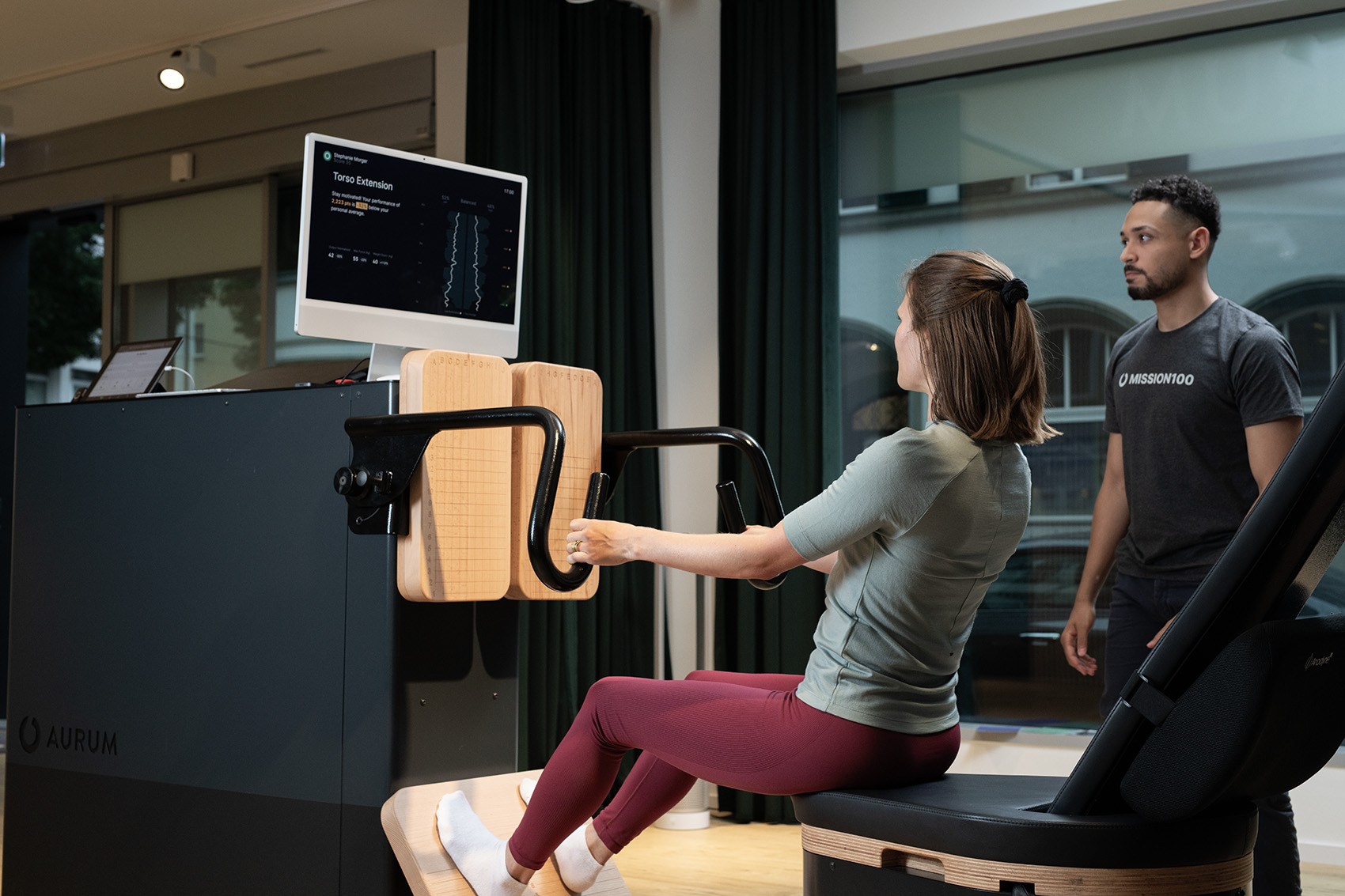

Individual Differences
Two clients. Identical goals. Identical training programmes. Identical AURUM output data. One thrives — returns enthusiastically, refers friends, is energised by every session. The other struggles — needs constant reassurance, finds the data cold, feels misunderstood. The difference is not the programme. It is personality — and whether the coach adapted their communication accordingly.
- Personality traits predict how clients respond to feedback, data, encouragement, and challenge
- Communication style mismatches are the most common source of early dropout in personal training
- Coaches who adapt their style to the client retain 30–40% more clients in the first 3 months
- A data-driven coach speaking to a relationship-first client creates friction — and loses the client
- The same information delivered in the wrong style lands as noise; in the right style, it lands as insight
The Big Five (OCEAN) personality model is the gold standard in psychological research — validated across cultures, ages, and contexts. Each trait exists on a spectrum. Most people fall somewhere in the middle — not at the extremes.
Openness to Experience
High O: curious, creative, enjoys new challenges. Coaching tip: introduce variety, discuss training science, frame data as exploration. Low O: prefers routine, consistency, familiar methods. Give the same excellent session every time.
Conscientiousness
High C: organised, goal-driven, follows through. Coaching tip: they love SMART goals and metric tracking — lean into the data. Low C: needs more structure from the coach. Be the organiser. Keep detailed session notes.
Extraversion
High E: energised by social interaction, talkative, enthusiastic. Coaching tip: engage conversationally, create energy in the room. Low E (Introvert): values calm, depth, fewer interactions. Respect their space — don't fill every silence.
Agreeableness
High A: warm, cooperative, avoids conflict. Coaching tip: build rapport first, use encouragement. They won't tell you they're unhappy — watch non-verbal cues. Low A: direct, competitive, challenging. Meet directness with directness.
Neuroticism (Emotional Stability)
High N: prone to anxiety, self-doubt, emotional reactivity. Coaching tip: extra encouragement, emphasise safety, celebrate small wins. Low N: calm, resilient, emotionally stable. Can handle direct feedback without emotional reaction.
DISC is a behavioural profiling tool widely used in sales, leadership, and coaching. It identifies four primary behavioural styles that directly map onto how clients communicate, make decisions, and respond to coaching.
The Driver
Direct, results-oriented, impatient. Values: efficiency, data, winning. Coaching: Lead with metrics. 'Your Output increased 18% this month.' Don't over-explain. Let them set the pace.
The Socialiser
Enthusiastic, optimistic, relationship-driven. Values: fun, recognition, social connection. Coaching: Create energy. Celebrate loudly. Use encouragement. Retention risk: they need to feel the relationship.
The Supporter
Patient, loyal, consistent. Values: safety, routine, harmony. Coaching: Honour their consistency. No surprises. Gradual change. Many long-term AURUM clients are high-S.
The Analyser
Accurate, systematic, detail-oriented. Values: correctness, logic, expertise. Coaching: Explain the science. Show the data. Never oversell — they will fact-check everything.
Beyond personality models, four practical communication styles — Analytical, Driving, Expressive, Amiable — help coaches adapt their language quickly in a session.
Analytical
Wants accuracy and evidence. Responds to: data, explanations, reasoning. Turn-offs: hype, vague language, emotion. AURUM script: 'Your Output Norm increased from 1.4 to 1.7 W/kg — that puts you in the top quartile for your age group.'
Driving
Wants results and efficiency. Responds to: achievements, bottom line, pace. Turn-offs: excessive talking, over-explanation. AURUM script: 'You hit a new personal best on Max Force today. Let's beat it next session.'
Expressive
Wants recognition and enthusiasm. Responds to: praise, stories, energy. Turn-offs: coldness, pure data focus. AURUM script: 'You were absolutely on fire today — I could see the improvement in every single curve.'
Amiable
Wants harmony and warmth. Responds to: consistency, reassurance, personal connection. Turn-offs: pressure, conflict. AURUM script: 'You've been so consistent — and it's showing. I'm genuinely proud of what you've built.'
Julian Rotter's Locus of Control theory describes the extent to which individuals believe they are the agents of their own outcomes — or whether they attribute outcomes to external forces.
Internal Locus
Believe their actions directly determine outcomes. 'I got stronger because I trained hard and consistently.' These clients are self-directed, highly coachable, and likely to stay long-term.
External Locus
Attribute outcomes to luck, others, or circumstances. 'I'm not making progress because I have bad genetics.' These clients need more coaching support — and more external data to prove the connection between effort and outcome.
The AURUM Advantage
Objective power curve data is uniquely powerful for external-locus clients. The data removes ambiguity: 'Your effort this session produced this specific result.' It builds internal locus over time.
Coach Strategy
For external-locus clients: consistently link action to data. 'You trained 8 sessions this month — and here is exactly what changed.' For internal-locus clients: challenge them to set stretch goals.
The six AURUM customer personas each have dominant personality traits. Recognising the intersection of persona and personality allows you to predict communication preferences before the first session.
Dominant + Analytical
High C (OCEAN), D+C (DISC). Values efficiency and data. Lead with metrics. Skip the warm-up conversation. Respect their time — start on time, end on time.
Amiable + Expressive
High A+E (OCEAN), I+S (DISC). Values connection and encouragement. Ask about the family. Celebrate consistency. Make her feel seen beyond the workout.
Steady + Conscientious
High C+A (OCEAN), S+C (DISC). Values safety, routine, expertise. Explain everything. Never rush. Consistency is their currency — honour it.
Driven + Competitive
High E+O (OCEAN), D+I (DISC). Values performance data and challenge. Use Max Force and Output aggressively. Set clear PB targets. Create competitive benchmarks.
External Locus + Anxious
High N (OCEAN), S (DISC). Needs safety, simplicity, and sustained encouragement. Never overwhelm with data. Celebrate attendance above all else in the first 12 weeks.
Cautious + Methodical
High C+N (OCEAN). Highly sensitive to pain signals. Lead with safety, explain every adjustment, and coordinate with their physio. Trust is earned slowly — never rushed.
The coach-client relationship is the single most powerful retention tool in AURUM's arsenal. Personality-aware coaching creates a loyalty that no app, no discount, and no competitor can replicate.
Remember what matters to them
Their daughter's recital, their business meeting, their upcoming trip. Reference it next session. This is not manipulation — it is human care.
Adapt session energy to their state
A high-S client who arrives quietly is not bored — they need calm consistency. Read the room before deciding on session intensity.
Deliver feedback in their preferred style
Data for D+C types. Stories for I+S types. All feedback should feel like coaching — not criticism.
Create the habit anchor
Same time, same day, same coach. Routine is the infrastructure of habit. Consistency in the relationship builds consistency in the client.
Celebrate their identity, not just their metrics
'You're the kind of person who shows up even when it's hard.' Identity-level feedback is the most powerful retention intervention known.
Every Client is
a Different Conversation.
The Big Five, DISC, communication styles, locus of control — these are not academic exercises. They are the real reason some coaches build loyal client bases and others churn through beginners. Master the frameworks. Practice the adaptations. Watch retention compound.
Next: Module 9 — Mental Health & Sport → The Coach's Responsibility for Psychological Safety