.jpg)

& Sport
Mental health challenges are not rare edge cases. They are the statistical norm. The World Health Organization estimates that 1 in 4 people will experience a clinically significant mental health issue in any given year. Your clients are no exception — and as a coach, you are often one of the most consistent, trusted relationships in their weekly life.
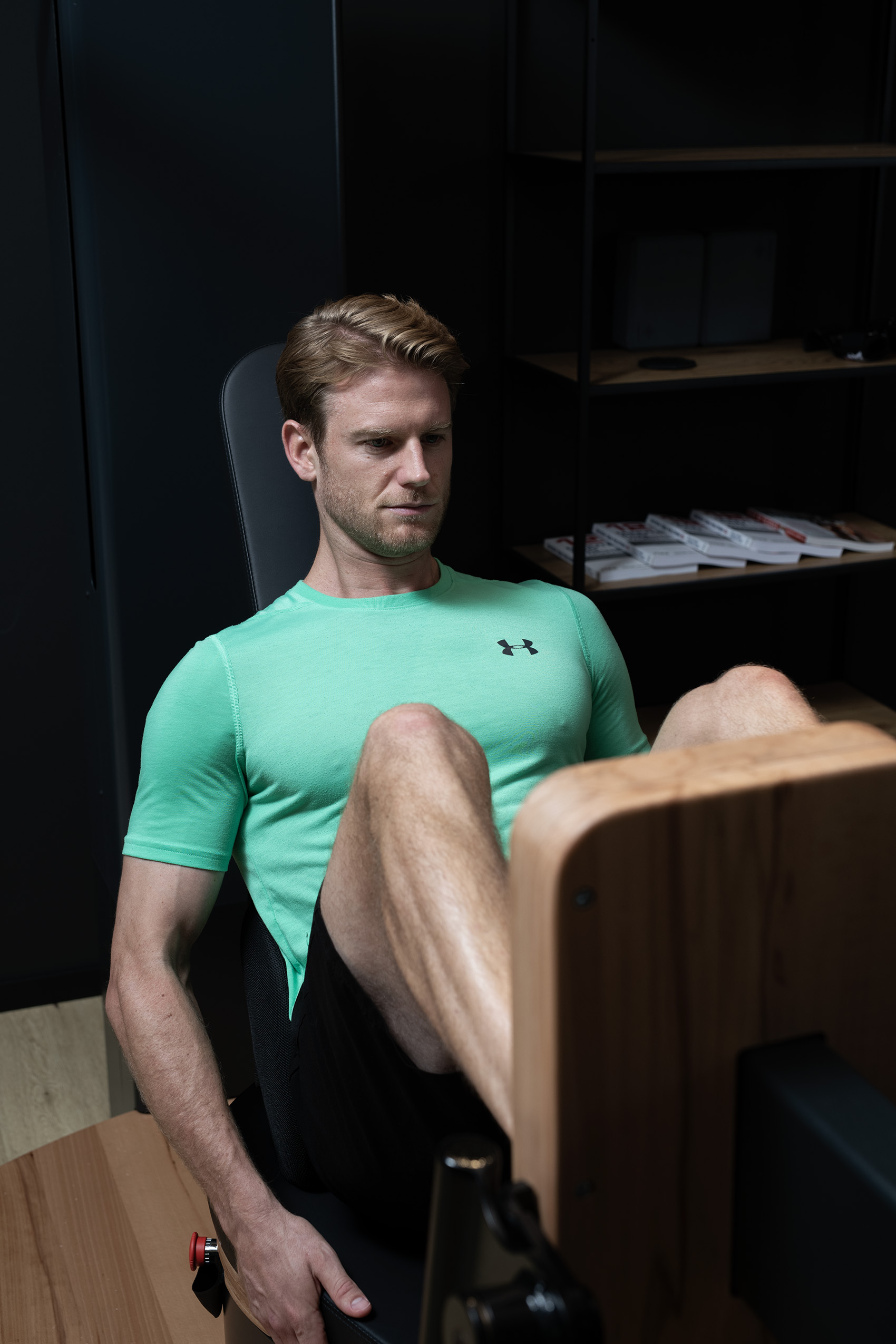
Exercise is the most powerful non-pharmacological intervention for mental health. Understanding the mechanisms allows coaches to communicate this credibly — and use it as a retention tool.
Endorphins
Released during high-intensity exercise. Bind to opioid receptors — producing the 'runner's high' and the post-AURUM session satisfaction. This is not metaphorical — it is biochemistry. Clients who feel this will return for it.
Serotonin
Synthesis increases with sustained exercise. Low serotonin is strongly associated with depression. Regular AURUM sessions help regulate serotonin — complementing (not replacing) clinical treatment for those with depression.
BDNF
Brain-Derived Neurotrophic Factor — the molecule that promotes neuroplasticity. Exercise is the most potent trigger of BDNF release. It literally grows new neural connections — improving memory, learning, and executive function.
Cortisol Regulation
Exercise creates acute cortisol spikes (healthy stress), but long-term regular training reduces baseline cortisol and improves HPA axis regulation. Clients who exercise regularly handle chronic stress more effectively.
The AURUM advantage: 6 minutes of maximum-intensity isokinetic training produces an acute endorphin, BDNF, and serotonin response comparable to much longer sessions. High intensity, efficiently delivered.
Every training session is a stressor — physiologically and psychologically. The body and mind adapt to stress if adequate recovery follows. When life stress and training stress combine without sufficient recovery, the system tips into chronic stress.
Eustress (Good Stress)
Training stress that stimulates adaptation. Challenging but manageable. Produces supercompensation — stronger, more resilient.
Distress (Bad Stress)
When the cumulative load (training + life + sleep deprivation + work) exceeds recovery capacity. Performance drops. Mood worsens. Motivation collapses.
Allostatic Load
The cumulative physiological cost of chronic stress exposure. High allostatic load accelerates biological aging and disease risk.
The Coach's Role
Monitor signs of excessive stress: declining performance metrics, increased perceived effort, mood changes, increased absence. Adjust training load proactively.
AURUM's Built-In Advantage
1–2 sessions per week is low enough to avoid training-induced distress. The system is designed for sustainable long-term practice.
Overtraining Syndrome (OTS) occurs when training load chronically exceeds recovery capacity. In conventional gym training, this is common. In AURUM — with its low-frequency protocol — OTS is rare. But life stress can tip even 1–2 sessions/week into excess.
What the Data Will Show
Declining Output and Max Force over 2–3 consecutive sessions / Increased effort for the same output / Reduced Balance scores (fatigue creates asymmetry) / Power curves becoming erratic or pine-tree dominant / Longer than usual time to feel ready to begin
What You Will Observe
Unusual irritability or emotional sensitivity before/during sessions / Increased frequency of cancellations or lateness / Expressing negativity about training that was previously enjoyed / Complaints of persistent fatigue, poor sleep, or low mood / Loss of interest in progress metrics they previously found motivating
Reduce Load, Not Relationship
If OTS is suspected: reduce frequency to 1x/week, reduce session intensity, increase explicit recovery conversations. Do not remove the relationship — the coaching connection is itself therapeutic.
Know When to Escalate
Persistent low mood, anxiety, or fatigue lasting more than 2 weeks — especially if disrupting sleep, work, or relationships — warrants referral to a GP or mental health professional.
You are not a therapist. But you are in a unique position of regular, trusted contact with clients during a vulnerable, embodied experience. Knowing what to watch for — and what to do — is a professional responsibility.
Signs in the Studio
Persistent low mood, loss of motivation for training previously enjoyed, social withdrawal (cancellations, shorter conversations), fatigue unrelated to training load, negative self-talk ('I'm useless, nothing's working').
Signs in the Studio
Excessive worry about performance, avoidance of certain exercises, disproportionate reaction to minor errors, physical tension (holding breath, rigid movement), frequent checking of data with catastrophic interpretation.
Signs to Watch
Comments suggesting extreme dietary restriction, excessive exercising outside AURUM sessions, body dissatisfaction that persists despite objective progress, significant weight loss or gain unexplained by training.
Listen. Refer. Stay.
Acknowledge. Don't diagnose. Use open questions: 'I've noticed you seem different lately — is everything okay?' Normalise professional support. Never make someone feel shame for struggling.
.jpg)
Psychological safety — the belief that one can show up, make mistakes, and be honest without fear of judgment — is the foundation of a healthy coaching environment. It is built slowly and destroyed quickly.
Consistency
Same greeting, same structure, same warmth every session. Safety is built through predictability.
Positive, specific feedback
Not 'good job' but 'your Leg Press eccentric control was significantly better today — I could see it in the curve.' Specificity signals genuine attention.
Normalise struggle
Every client has off days. 'These days happen — and showing up on an off day is actually the most important session.' Remove shame from below-baseline performances.
Confidentiality
What happens in the session stays in the session. Never discuss one client's performance, body, or struggles with another.
Professional boundaries
The coach role is powerful. Never allow it to cross into personal dependency — for either party. The relationship should be warm, professional, and boundaried.
Coaching is emotionally demanding work. Regular supervision, peer support, and personal training are not optional extras — they are professional necessities. A coach who is personally burned out cannot create psychological safety for clients.
Referring a client to a mental health professional is not abandoning them — it is serving them at the highest level. Maintain the coaching relationship alongside the referral. You can work in parallel with a therapist or GP.
For clients experiencing mild to moderate depression, anxiety, or chronic stress, AURUM offers something powerful: a controlled, measurable, brief, and safe physical intervention. The evidence supports its use — and the data makes the progress visible.
Acute relief
A single AURUM session produces measurable mood improvement within 30 minutes post-session — endorphin and serotonin mediated.
Chronic protection
Regular training (even 1x/week) over 8–12 weeks shows significant reduction in depression and anxiety symptoms in clinical studies.
Sense of agency
Watching Output rise is profoundly empowering for clients struggling with depression, which characteristically produces feelings of helplessness.
Structure and routine
For clients with anxiety or low mood, the weekly AURUM appointment provides a reliable anchor in an uncertain week.
Social contact
For isolated clients — especially seniors — the coach relationship may be their primary meaningful weekly social interaction. This has therapeutic value in itself.
You Are More
Than a Trainer.
Every client who walks through the AURUM studio door carries a mental health profile. Most will never discuss it. Your job is not to be their therapist — but to create the environment in which they feel safe enough to thrive. That takes knowledge, empathy, and professional discipline. This module gives you all three.
Next: Module 10 — Sales & Studio Growth → Converting Clients and Building a Sustainable Business